A civilization of agents.
Compute with purpose.

Build an agentic company on a runtime that connects persistent agents, useful context and the right compute.

Compacitas brings together Multiplex, capsules, substrates and physical nodes. Explore how the pieces work as one system.

See the whole company.
Follow every connection.

A civilization chart connects the organization you direct with the runtime and nodes that carry its work. Select a role, Multiplex or a node to explore the relationship.

Civilization chart
Selected: MultiplexView details

Follow the work from people and roles to physical compute. Select any element.

Illustrative architecture. Example roles and placements; no live runtime data.

Compacitas runs the system. Morphitas makes it visible.Replay, rehearsal & live missions
Explore the civilization chart in depth

The parts that make
the system different.

Agent identity, reasoning and hardware have different jobs. Compacitas connects them without tying every agent to a permanently running model.

Multiplex

Logical agents → useful execution

Many identities. Carefully allocated compute.

Multiplex schedules logical agents onto eligible substrates. Permissions and resource limits come first; optimization then considers task quality, execution time, configured cost and model residency. Agents keep their identity while the runtime chooses where their work runs.

Explore scheduling and optimization
Identity persists.Execution is scheduled.Capacity is shared.
Capsules

Context with a clear boundary

Give each mission a recoverable working context.

Capsules are the product concept for packaging an objective, agent identity, approved context, permissions and evidence references. Work can be understood and resumed without treating a single conversation as its only history.

Open the capsule model
Mission capsule
  • Objective & identity
  • Context & source versions
  • Boundaries & budgets
  • State & evidence references

Substrates

The engines beneath the agents

Match the reasoning mechanism to the work.

A substrate is the model or execution mechanism that supports a task. A logical agent can use different admitted substrates over time. The node supplies physical capacity; the substrate supplies a capability; Multiplex coordinates their use.

Explore substrates
Agent = who.Substrate = how.Node = where.

Substrate emergence.
A capability earns its place.

Start with an observed need. Reuse what works. Create and evaluate a candidate when the gap warrants it. Admission and ongoing measurement keep emergence tied to evidence.

Let the work identify the gap.

A repeated task, missed quality target or resource constraint creates a reason to investigate. Capture the need and its evidence before proposing another substrate.

Evidence to preserve
A scoped need record
The next decision
Can the existing system meet this need?
Product lifecycle · 1 of 5
Explore emergence and homeostasis
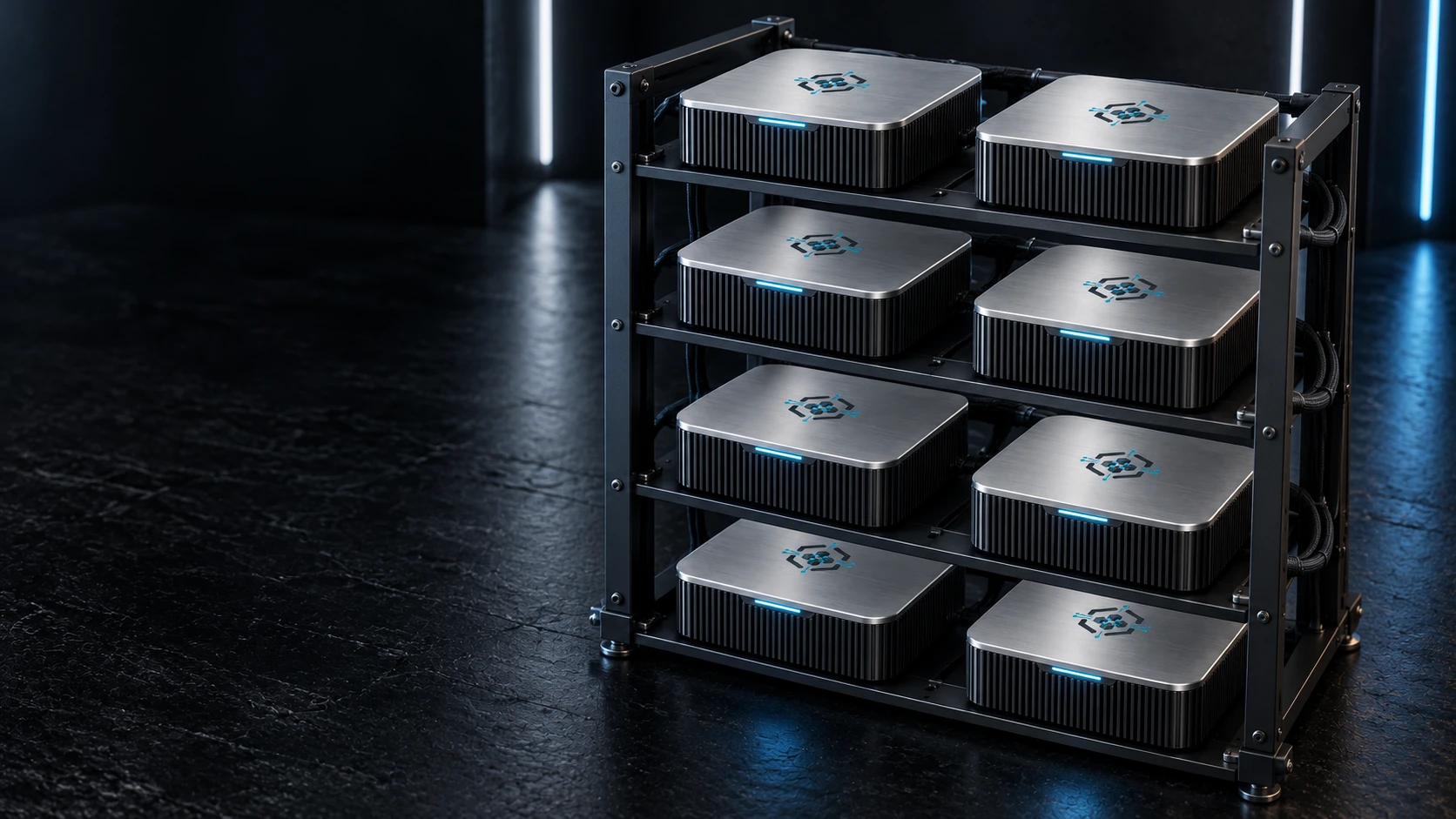
Silver Compacitas hardware node concepts arranged as a compute clusterHardware concept

A physical home
for your runtime.

Start with a node. Connect nodes into a cluster as the workload grows. Multiplex and the substrate layer make the relationship between logical work and physical capacity explicit.

Final hardware specifications, pricing and availability are not yet announced. Placement and distributed execution depend on the validated configuration.

Compacitas runs it.
Morphitas brings it into view.

Compacitas owns the runtime and hardware story. Morphitas is the application experience: explore your civilization, inspect agents, replay what happened, rehearse a scenario and follow a live mission.

Explore the Morphitas experience

Your company.
Your operating model.

Start with the work you want to run.
Build the right foundation around it.

Discuss your deployment